Implementation
DeployTurn the contract into a configured, integrated, owned operating capability.
How Leaders Turn Security Purchases into Accountability, Performance, and Resilience
Buying technology or a managed service is only the beginning. The leadership problem is what happens next: deployment, adoption, evidence, governance, reporting, optimization, and the next decision.
No registration. Assessment answers stay in your browser.
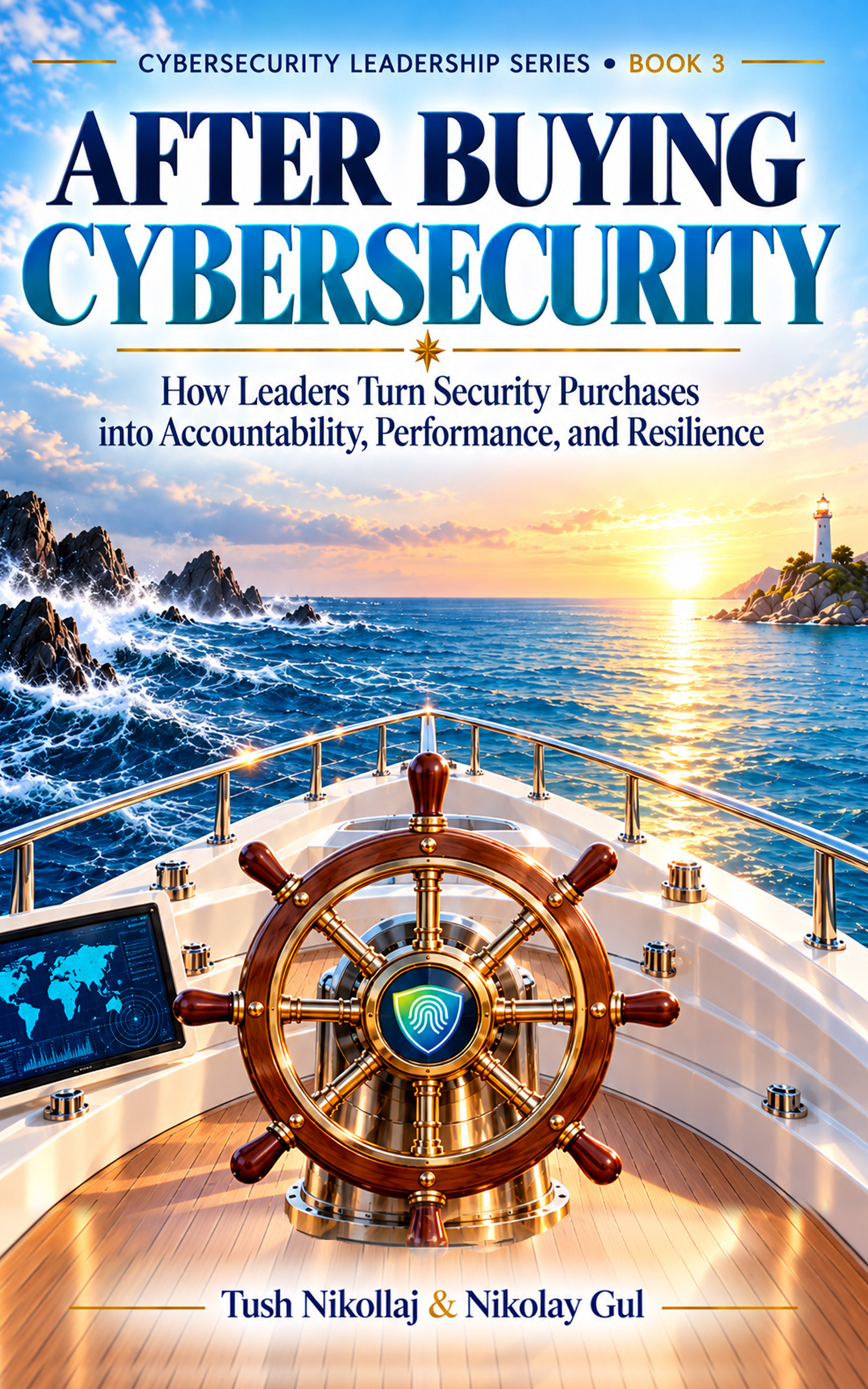
Prototype cover; production details may change.
Three things: that the purchase became an operating capability, that its performance can be evidenced, and that the next decision can be defended with facts rather than renewal momentum.
A security product can be licensed without being deployed, deployed without being used, used without being governed, governed without useful evidence, measured without being improved, and renewed without a defensible decision.
Turn the contract into a configured, integrated, owned operating capability.
Make the control part of real workflows instead of an optional side process.
Establish ownership, exceptions, evidence, and a governance rhythm.
Translate operating evidence into decision-useful leadership reporting.
Reduce friction, close gaps, consolidate overlap, and improve performance.
Use evidence to expand, renegotiate, replace, consolidate, or retire.
Select any phase. The model connects leadership questions to evidence and decisions rather than treating the purchase itself as the outcome.
 Evidence-led
These are operating questions, not accusations. They are designed to expose gaps early enough to correct them.
Deployment scope, integration, telemetry, or ownership never reaches the level assumed during the purchase.
Users, administrators, or process owners work around the control because friction or workflow design was ignored.
Exceptions, changes, dependencies, and accountability accumulate without a decision rhythm.
Dashboards report activity while leadership still cannot connect evidence to coverage, risk, resilience, or business impact.
Capabilities duplicate each other, consume staff time, or produce noise because optimization never became an owned activity.
The renewal date arrives before decision-makers have agreed on evidence, alternatives, negotiation points, or exit criteria.
The higher the reporting level, the more directly it should help leadership decide what to change, fund, accept, or stop.
Use the role selector to see the questions that make post-purchase governance practical.
The site is designed as a working companion, not a promotional landing page.
18 questions across the six phases. Results are calculated locally and separated by phase so gaps are visible.
Run the assessment →Implementation checkpoints, QBR questions, evidence register, reporting structure, and renewal decision prompts.
Open the toolkit →Search operating, governance, resilience, procurement, measurement, and reporting terms without vendor language.
Search the glossary →The three books address different stages of the same leadership problem.
Not primarily. The focus begins after a purchase or service agreement exists: implementation, adoption, oversight, reporting, optimization, and renewal.
No. It is written for the leadership system around cybersecurity: executives, boards, CISOs, CIOs, security and IT teams, finance, procurement, and service-provider stakeholders.
No. It is an educational operating-maturity diagnostic. It is not a compliance audit, risk assessment, penetration test, certification, or legal opinion.